Where to Stay Near National Parks in Nepal (Best Hotels, Lodges & Budget Stays)
Share:
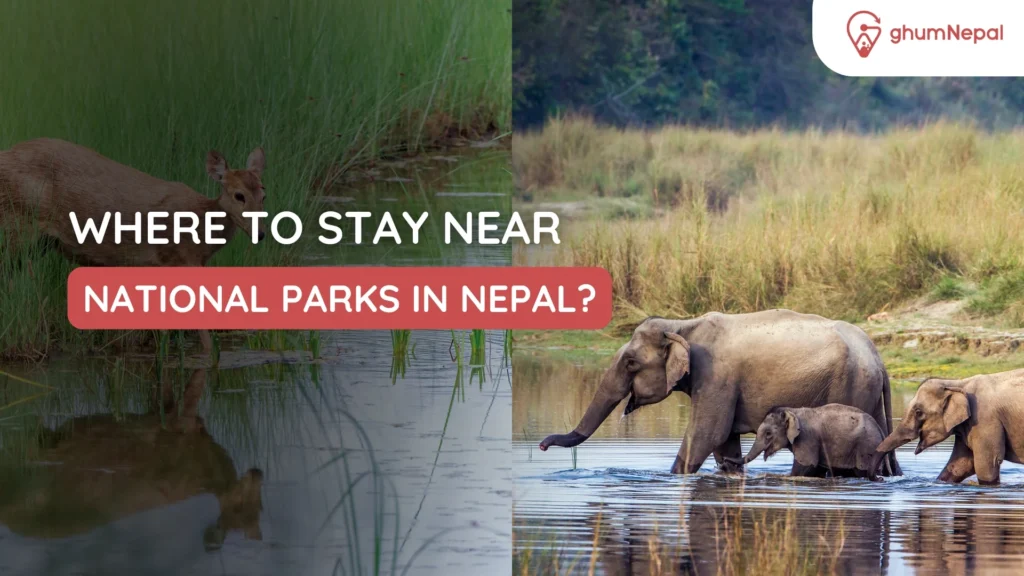
The best places to stay near national parks in Nepal include luxury jungle lodges in Chitwan, eco-lodges in Bardia, and teahouses in Everest and Langtang regions. Budget travelers can find affordable guesthouses in Sauraha and Thakurdwara, while luxury seekers can choose all-inclusive wildlife resorts.
Finding the perfect stay near national parks Nepal is the first step to an unforgettable adventure.
Use ghumNepal to compare prices and book your hotels or local homestays securely. From premium resorts to authentic village stays, we make booking your next nature escape simple and stress-free.
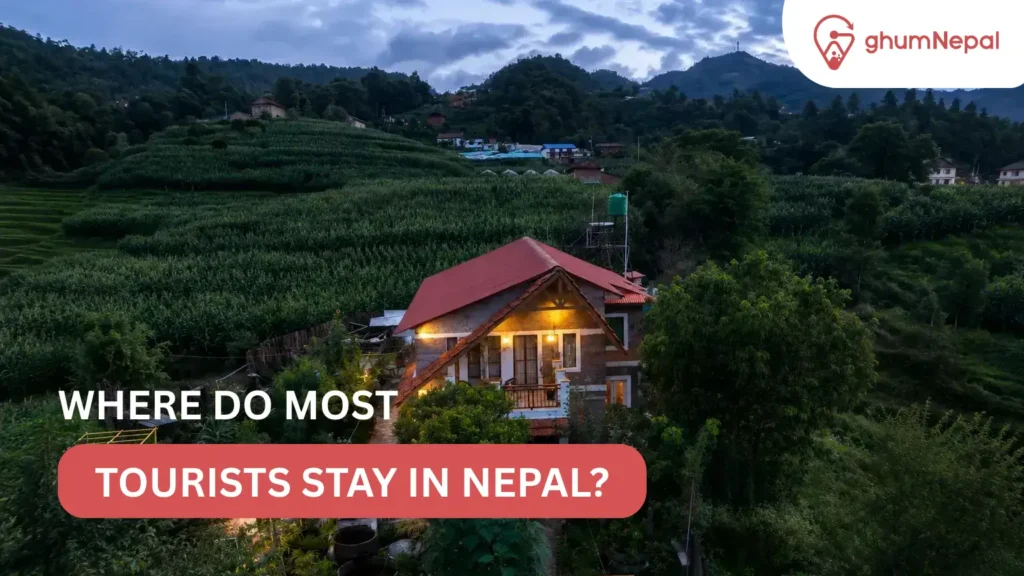
For a broader look at the lodging landscape across the country, check out our guide on where tourists stay in Nepal.
How to Choose a Hotel Near Nepal National Parks?
You can choose the right accommodation near Nepal’s national parks directly by these reasons:
- Wildlife Proximity: Staying near park boundaries or within buffer zones puts you first in line for dawn safaris, the best time to spot tigers and rhinos.
- Experience Style: Your stay defines your trip. Choose a luxury lodge for guided safaris, a mountain teahouse for trekking grit, or a community homestay for authentic Tharu culture.
- Comfort vs. Adventure: High-end resorts offer pools and gourmet meals, while remote teahouses offer basic beds and traditional dal bhat. Pick based on your travel style.
- Safety & Expertise: Established lodges provide certified naturalist guides, essential for safe jungle treks and navigating park regulations.
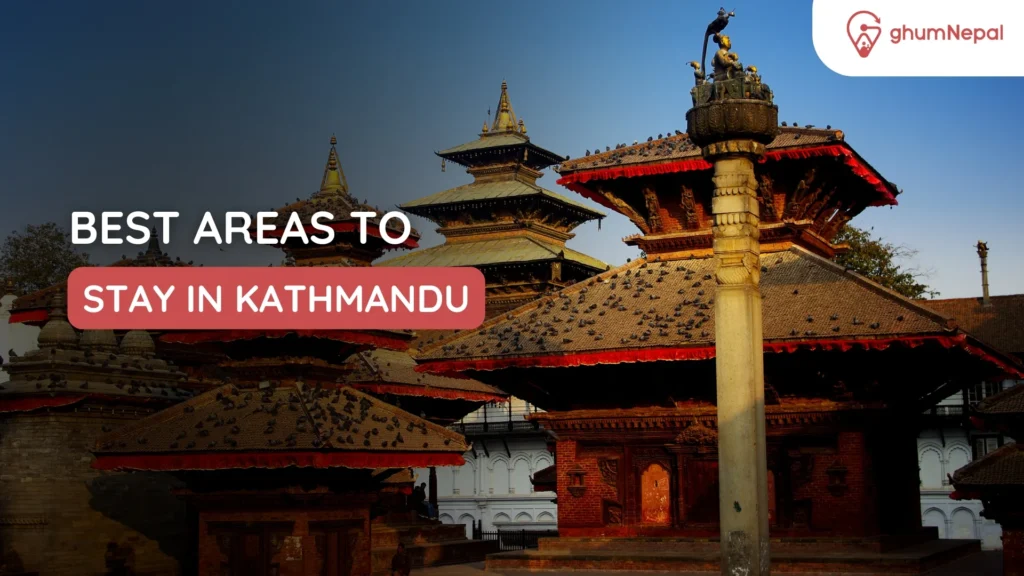
If you are a first-time visitor, check out the best areas to stay in Kathmandu for easy airport access.
Best Places to Stay Near National Parks in Nepal (By Location)
From the humid, tiger-tracked jungles of the Terai to the high-altitude teahouses of the Himalayas, Nepal’s national parks offer distinct lodging experiences. Whether you are looking for a luxury riverside resort or a basic mountain lodge, here are the top areas to base your next wilderness adventure.
Where to Stay Near Chitwan National Park
Chitwan National Park is Nepal’s premier wildlife destination, home to the greater one-horned rhino and the elusive Bengal tiger. Situated in the lowland Terai, the park offers a wide range of stay options. Visitors can choose from a wide range of hotels in Chitwan National Park, Nepal, from luxury jungle resorts to budget-friendly guesthouses.
Luxury Jungle Lodges & Resorts
Luxury stays in Chitwan prioritize deep nature immersion and world-class service. Most are located in quieter areas like Meghauli or Jagatpur, featuring high-end amenities like infinity pools, private villas, and gourmet dining.
These properties offer all-inclusive packages with expert-led safaris, boat rides, and exclusive naturalist guides, making them ideal for honeymoons or high-end holidays.
Mid-Range Hotels & Jungle Camps
These hotels in Chitwan National Park Nepal offer a perfect balance of comfort, affordability, and adventure, often located within the park’s buffer zones or the outskirts of Sauraha. These hotels typically feature air-conditioned rooms. swimming pools, and well-maintained gardens.
They offer professional safari services and experienced guides at a more accessible price point, serving as an excellent choice for families and regular wildlife enthusiasts.
Budget Guesthouses & Homestays
Budget-friendly stays are concentrated in the gateway village of Sauraha. These guesthouses offer clean, basic rooms and easy walking access to the park entrance and riverside restaurants.
For a more authentic experience, community homestays in surrounding Tharu villages allow travelers to live with local families, providing a unique cultural perspective while directly supporting the local economy.
Best Area to Stay: Sauraha vs Buffer Zone
| Factor | Sauraha Village | Buffer Zone Lodges |
| Proximity to Park | 5–10 min walk to gate | Direct/inside park boundary |
| Price Range | $8–$80/night | $80–$500/night |
| Wildlife Viewing | Via organized tours | On-property sightings possible |
| Dining & Nightlife | Multiple restaurants/cafes | In-house dining only |
| Best For | Budget & mid-range travelers | Luxury & immersive safari |
Tip: Stay in Sauraha if you want flexibility, dining options, and budget control. Choose a buffer zone lodge if maximum wildlife proximity and an all-inclusive immersive experience are your priority.
Where to Stay Near Bardia National Park Nepal
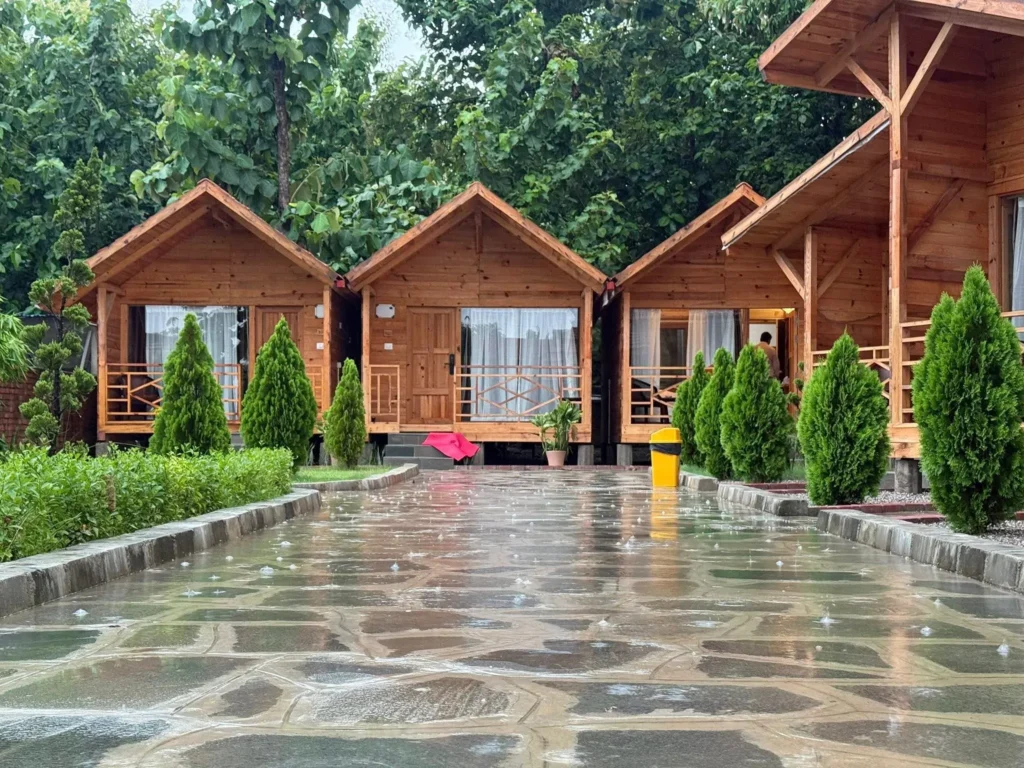
Bardia National Park is ideal for travelers looking for the best lodges near Bardia National Park, offering a quieter and more immersive wildlife experience.
Bardia National Park in far-western Nepal is the country’s largest Terai park and one of its best-kept secrets. With significantly fewer tourists than Chitwan, Bardia offers a rawer, more intimate wildlife experience, and the local accommodation reflects this unspoiled, rugged character.
Eco-Lodges & Wilderness Stays
Eco-lodges in Bardia focus on deep wilderness immersion and sustainable tourism. Often located along the banks of the Karnali River or on the edge of the park boundary, these lodges prioritize nature over typical luxury.
These are considered the best lodges near Bardia National Park for travelers seeking authentic jungle experiences.
They offer rustic yet comfortable cottages, solar power, and organic dining. The highlight of these stays is the access to elite naturalist guides who specialize in tracking Bengal tigers and spotting Gangetic dolphins, making them the top choice for serious wildlife enthusiasts.
Budget Lodges & Local Guesthouses
Budget stays are primarily centered in the gateway village of Thakurdwara. These guesthouses offer simple, clean, and authentic accommodation, often run by local Tharu families. Despite the low price point, these stays provide incredible proximity to the parks, sometimes just steps away from wild elephant territory.
They are excellent for backpackers and independent travelers who want to arrange walking safaris and cultural tours while directly supporting the local community.
Why You Should Stay in Bardia
You can stay in Bardia due to:
- Less crowded than Chitwan you may have entire safari trails to yourself
- Higher tiger sighting rates per visitor due to lower tourist volume
- Gangetic dolphins can be spotted on Karnali River boat rides
- Wild elephant herds roam freely through the park
- Authentic Tharu culture is preserved more genuinely here
- Perfect for travelers seeking a raw, off-the-beaten-path nature experience
Where to Stay Near Sagarmatha National Park (Everest Region)
A UNESCO World Heritage Site, Sagarmatha National Park protects the world’s highest peaks, including Mount Everest. Staying here follows the iconic “teahouse” model, with lodges strategically placed along trekking trails to provide rest and shelter for adventurers.
The region is famous for its Everest teahouse accommodation, where trekkers stay in lodges along the trail.
Teahouses for Trekkers
Teahouses are the backbone of the Everest experience, ranging from vibrant commercial hubs like Namche Bazaar to remote outposts at higher altitudes. These lodges offer a spectrum of comfort, from private rooms with attached bathrooms in lower elevations to basic, cozy twin-sharing rooms as you ascend.
Everest teahouse accommodation ranges from basic twin rooms to more comfortable lodges in places like Namche Bazaar. Centralized dining halls warmed by traditional stoves serve as social hubs, providing hearty local meals and essential warmth for trekkers following the Everest Base Camp or Gokyo Lakes trails.
Pro tip: Booking Everest teahouse accommodation in advance is highly recommended during peak trekking seasons.
Luxury Mountain Hotels
For those seeking elevated comfort, the Everest region offers high-end mountain lodges that redefine “trekking.” These properties feature premium amenities rarely found at high altitudes, such as heated rooms, electric blankets, en-suite bathrooms, and gourmet dining.
Many of these luxury stays are positioned to offer iconic, direct views of Everest, Lhotse, and Ama Dablam, allowing guests to experience the majesty of the Himalayas without sacrificing modern conveniences.
Tips for Booking in Everest Region
- Book ahead for peak seasons: March–May (spring) and September–November (autumn) are the busiest trekking windows popular teahouses fill up weeks in advance
- Plan stays around altitude: Never ascend more than 300–500m in sleeping altitude per day your lodging itinerary should follow this rule
- Off-season advantage: December–February offers cheaper rates and empty trails, but extreme cold is expected above 4,000m
- Bring cash: Most Khumbu teahouses do not accept cards; ATMs are only available in Namche Bazaar
Where to Stay Near Langtang National Park Nepal
Langtang National Park, located just north of Kathmandu, offers a stunning blend of high-altitude yak pastures, ancient Buddhist monasteries, and resilient mountain communities. Since the 2015 earthquake, the valley has seen a remarkable reconstruction, with local families leading the way in building new, safe, and welcoming accommodations.
Teahouses & Village Lodges
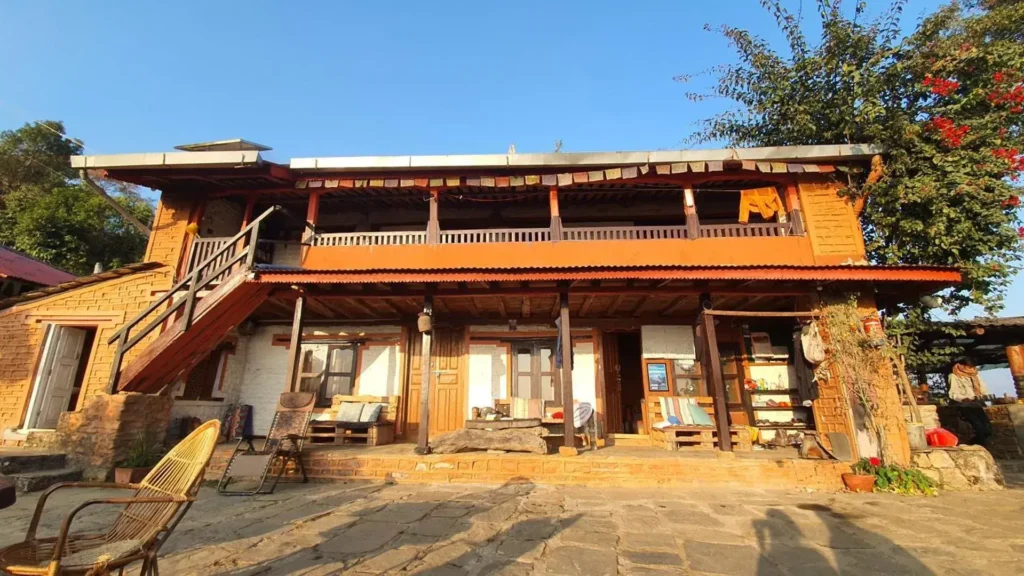
Accommodation in the Langtang Valley is primarily comprised of family-run teahouses and guesthouses. These lodges offer simple, clean, and warm rooms with communal dining spaces where guests can enjoy traditional Tamang and Nepali cuisine.
Staying in these villages, from the initial forest trailheads to the high-altitude settlement of Kyanjin Gompa, provides a deeply personal connection to the local community and stunning views of peaks like Langtang Lirung. These stays are essential for those wanting an authentic trekking experience while directly contributing to the local economy.
- Langtang Village Lodges
- Kyanjin Gompa Guesthouses
Eco & Community Lodges
For travelers prioritizing sustainable and ethical travel, Langtang features several eco-conscious and community-certified lodges. These properties often adhere to strict standards regarding fair wages, waste management, and environmental protection.
Many are recognized by national trekking associations for their commitment to social responsibility. Choosing these lodges ensures that your stay supports regenerative tourism and the long-term well-being of the Tamang heritage trail.
Note: Trekking Agencies Association of Nepal (TAAN) certifies lodges that meet standards for sustainability, fair wages, and community benefit. Several TAAN-supported lodges operate in the Langtang corridor and are identifiable by their certification display. Choosing these lodges ensures your money benefits the local Tamang community directly.
What to Expect
- Facilities are basic; hot showers may be solar-powered and intermittent; electricity is limited
- Food is simple but wholesome; dal bhat, noodle soup, and Tamang bread are staples
- WiFi is unreliable above Syabrubesi: Carry an offline map and download content before trekking
- The experience is deeply authentic. Langtang sees far fewer trekkers than Everest and Annapurna, giving you a more personal connection with communities and landscapes
Where to Stay Near Makalu Barun National Park
Makalu Barun National Park in eastern Nepal is a true frontier wilderness, home to the world’s fifth-highest peak, Mount Makalu. As one of Nepal’s least visited and most rugged parks, accommodation here is far more limited and rustic than in the more popular trekking regions, appealing to those seeking total isolation.
Teahouses Along the Trail
Infrastructure in the Makalu region is minimal, consisting of a few family-run teahouses in lower-elevation villages. These lodges offer a very basic level of comfort: simple wooden rooms, shared facilities, and traditional home-cooked meals.
Staying here provides a genuinely authentic and raw trekking experience, where the hospitality of the local families is the primary highlight.
Camping Options
As the trail ascends into the remote upper Barun Valley, teahouse availability disappears, making camping a necessity. Organized expeditions utilize full camping setups provided by trekking agencies, including kitchen staff and high-altitude tents.
Camping beneath the massive south face of Makalu offers an unparalleled wilderness experience, allowing trekkers to sleep in the heart of one of the world’s most dramatic and pristine mountain landscapes.
Travel Tips
- Hire a licensed guide trails are remote and not well-signed; a local guide is essential
- Carry sufficient supplies from Tumlingtar or Kathmandu resupply beyond Seduwa is extremely limited
- Restricted Area Permit is required alongside the national park entry permit
- Allow 18–22 days for the full Makalu Base Camp circuit
- Best season: March–May and October–November
Where to Stay Near Rara National Park Nepal
Rara National Park in far-western Nepal protects the “Queen of Lakes”the largest and deepest freshwater lake in the country. Situated in a remote alpine landscape, accommodation here is limited, reflecting the park’s status as a pristine and untouched wilderness.
Lodges Near Rara Lake
Infrastructure at Rara is minimal, consisting of a few basic lodges and government-run rest houses located near the lake shore. These facilities offer simple rooms and traditional meals with limited modern amenities.
While the stays are modest, the location is unparalleled, offering immediate access to crystal-clear waters and tranquil forests that reflect the surrounding snow-capped peaks.
Camping Options
For those seeking total immersion in nature, camping is the premier choice at Rara. Designated camping zones within the park allow travelers to sleep under some of the clearest night skies in the Himalayas.
Because of the remote location, visitors must be self-sufficient or arrange a full-service camping trek through an agency, ensuring all equipment and supplies are brought in from major hubs like Nepalgunj or Jumla.
Travel & Access Tips
- Fly to Talcha Airport (near Rara) via Nepalgunj on small mountain aircraft flights are weather-dependent and often delayed
- Alternative: Trek from Jumla (2–3 days) through beautiful hill country
- Best time to visit: October–November for clear skies; April–May for rhododendron blooms
- Carry all essentials there are no shops or pharmacies near the lake
Where to Stay Near Shivapuri Nagarjun National Park
As Kathmandu’s closest protected wilderness, Shivapuri Nagarjun National Park is a premier destination for day hikes, bird watching, and quick weekend escapes. Located just 30–45 minutes from the city center, it offers a refreshing mountain forest environment right on the doorstep of the capital.
Resorts & Retreats
Several charming eco-cottages and resorts are situated just outside the park’s boundaries, offering a peaceful retreat from the city. These properties often focus on organic dining, wellness, and direct access to the park’s hiking trails.
For those on multi-day circuits, simple lodges in villages like Chisapani provide essential rest stops with some of the most accessible sunrise views of the Himalayan panorama in Nepal. These stays are ideal for travelers seeking a one- or two-night nature immersion without a long travel time.
- Shivapuri Heights Cottage
- Chisapani Village Lodges
Staying in Kathmandu
Because of its proximity, many visitors use Kathmandu as a strategic base for exploring the park. Staying in northern neighborhoods like Budhanilkantha, Maharajgunj, or Lazimpat places you within a 20-minute drive of the main park entrance.
This allows you to enjoy all the amenities, dining, and luxury of the city while still being able to start a forest hike or bird-watching session by 7:00 AM. For those who want a blend of nature and culture without a long bus ride, booking a home stay near Kathmandu offers a quiet escape on the edge of the Shivapuri forest.
Types of Accommodation Near National Parks in Nepal
From high-end jungle retreats to rustic mountain shelters, the variety of stays in Nepal is as diverse as the landscapes themselves. Understanding these different lodging styles helps you align your comfort preferences with your adventure goals, whether you are looking for an all-inclusive safari experience or a simple bed after a long day of trekking.
Comparison Table Between Different Accommodations near National Parks
| Type | Best For | Price Range |
| Luxury Lodges | Comfort & honeymoon | $150–$500 |
| Eco-Lodges | Nature lovers | $50–$150 |
| Teahouses | Trekkers | $10–$40 |
| Budget Guesthouses | Backpackers | $5–$20 |
| Camping | Adventure | Free–$15 |
Which is the Best Areas to Stay Near National Parks?
Location is everything when it comes to wildlife sightings and mountain views. To help you narrow down your search, this quick comparison highlights the primary gateway hubs and the most popular types of stays found in each of Nepal’s iconic protected areas.
| National Park | Best Area | Stay Type |
| Chitwan | Sauraha | Resorts & lodges |
| Bardia | Thakurdwara | Eco-lodges |
| Everest | Namche Bazaar | Teahouses |
| Langtang | Kyanjin Gompa | Local lodges |
Practical Tips for Booking Hotels Near National Parks in Nepal
Planning a stay in Nepal’s wilderness requires more than just picking a room; you need to account for seasonal wildlife patterns, altitude logistics, and local permits. Use these practical tips to ensure your accommodation is secured, sustainable, and perfectly timed for the best nature experience.
When is the Best Time to Visit Each National Park?
- Chitwan & Bardia (Terai Parks): The best time to visit is October through March. Vegetation thins out in winter, making wildlife spotting significantly easier. Temperatures are comfortable during the day (20–28°C) and cool at night. Avoid the monsoon season (June–September) when the park is partially closed and flooding occurs.
- Sagarmatha (Everest) & Langtang: The two ideal trekking windows are March–May (spring) and September–November (autumn). Spring offers blooming rhododendrons and relatively stable weather. Autumn delivers the clearest mountain views and the best photography conditions. Both seasons see high lodge occupancy; book early.
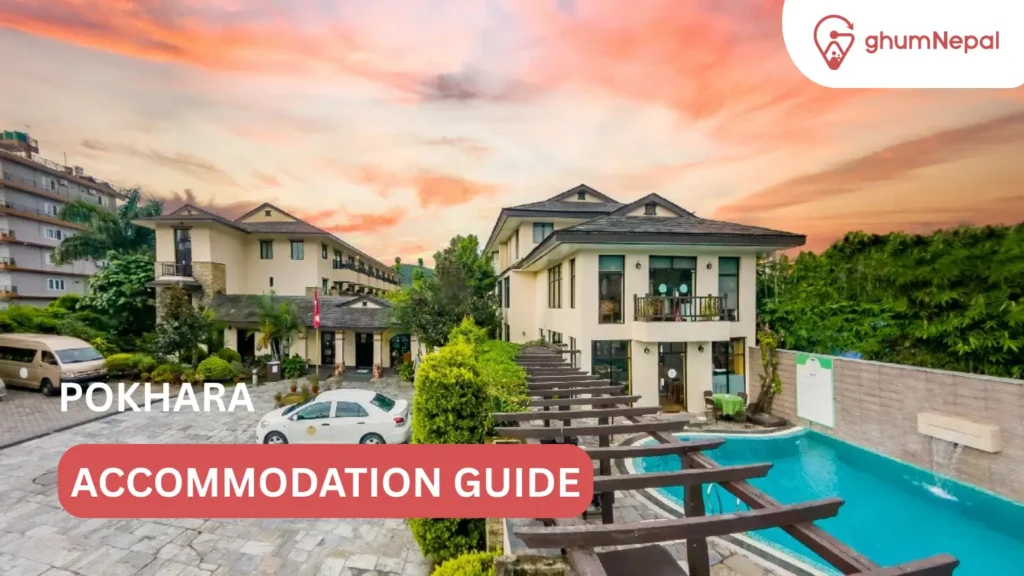
If you’re heading toward the Annapurna, check out our Pokhara accommodation guide for the best lakeside retreats.
When to Book Hotels Near National Parks in Advance?
- Peak season (Oct–Nov, March–May): Book luxury lodges and popular teahouses 2–3 months in advance
- Mid-season: 3–4 weeks in advance is generally sufficient
- Off-season: Walk-in bookings are usually possible, especially in Langtang and Bardia
Permits You Need for National Parks Visit
For Terai Parks (Chitwan, Bardia):
- National Park Entry Fee: NPR 1,500–2,000 per person
- Buffer Zone Fee: Included in most lodge packages
For Himalayan Parks (Sagarmatha, Langtang):
- TIMS Card (Trekkers’ Information Management System): NPR 2,000
- National Park Entry Fee: NPR 3,000 (Sagarmatha), NPR 3,000 (Langtang)
- Makalu Barun & Rara require additional restricted area permits.
How to Choose Eco-Friendly & Responsible Lodges?
When booking accommodation near Nepal’s national parks, prioritize lodges that:
- Use solar energy and limit plastic waste
- Employ local guides and staff from nearby communities
- Are TAAN-certified or endorsed by the Nepal Tourism Board
- Participate in community tourism programs
- Follow Leave No Trace principles for waste management
Supporting responsible lodges directly funds conservation efforts and improves local livelihoods, making your stay a positive force for Nepal’s protected landscapes.
FAQs About Staying Near National Parks in Nepal
Chitwan is the top choice for accessibility and diverse lodging, while Bardia offers a more exclusive, remote wildlife experience.
Yes, world-class lodges like Meghauli Serai (Chitwan) and Hotel Everest View provide premium stays ranging from $150 to $500 per night.
Yes, it is safe if you stay with reputable lodges and always explore with a certified naturalist guide.
Prices range from $5–$25 for budget guesthouses to $150–$500+ for luxury resorts and high-end mountain lodges.
Generally, no; most accommodations are in buffer zones or gateway villages, though basic government rest houses exist in remote parks like Rara.
The best lodges near Bardia National Park include eco-lodges and jungle resorts located around Thakurdwara and the Karnali River. These lodges offer guided safaris, wildlife tracking, and immersive jungle experiences.
Everest teahouse accommodation consists of basic to comfortable mountain lodges along trekking routes in the Everest region. Rooms are simple, with shared or private bathrooms, and meals are served in communal dining halls.
Summing Up: Best Places to Stay Near National Parks in Nepal
Nepal’s protected areas offer diverse experiences, from high-end jungle retreats in the lowlands to cozy mountainside teahouses under the Himalayan stars. For a premier stay near national parks in Nepal, Chitwan is the top choice for luxury and accessibility, while Bardia provides a rawer, more intimate wilderness experience with fewer crowds and higher tiger-sighting potential.
In the high-altitude regions of Sagarmatha and Langtang, accommodation centers on iconic trekking trails where local lodges provide essential comfort and cultural connection. For those seeking true solitude, the remote alpine landscapes of Rara offer a pristine “hidden gem” experience.
Ultimately, choosing a sustainable stay near national parks in Nepal is an investment in both local communities and conservation. By prioritizing eco-friendly and community-run lodges, you ensure your journey supports the preservation of Nepal’s incredible wild places for future generations.
Ready to Plan Your Stay Near National Parks in Nepal?
Research your permits, book your lodge early during peak season, and prepare for one of the most unforgettable nature experiences on earth.
Compare and book the best hotels near Nepal’s national parks with ghumNepal today find deals, check availability, and secure your stay in minutes.