What is Ghale Gaun Famous For? A Complete Guide
Share:
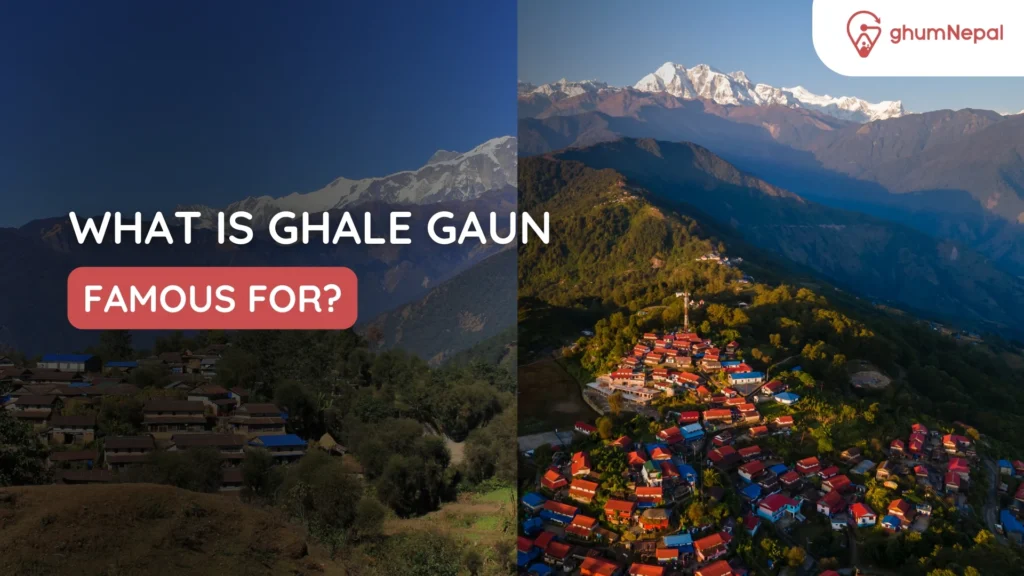
Ghale Gaun is famous for its Gurung culture, community-based homestay tourism, and panoramic Himalayan views of the Annapurna and Manaslu ranges.
Tucked into the hills of the Lamjung district at roughly 2,095 meters above sea level, Ghale Gaun is one of Nepal’s most celebrated community-based tourism destinations. When travelers ask, “What is Ghale Gaun famous for?” the answer lies in its status as a pioneer for Ghale Gaun village tourism in Nepal.
Recognized across South Asia as a model village, it offers travelers a rare window into the living Gurung culture in Ghale Gaun, complete with sweeping Himalayan panoramas, hand-cooked village meals, and evenings filled with ancient folk dances under starlit skies. Whether you’re a first-time visitor or a seasoned trekker, this Ghale Gaun travel guide covers everything you need to know before you go.
What Makes Ghale Gaun Special?
Ghale Gaun isn’t just a scenic stop; it was declared the SAARC Model Tourism Village and, more recently, Nepal’s first Smart Village. This means while you enjoy the traditional lifestyle, you also benefit from organized community management, clean drinking water systems, and solar-lit streets.
So, what is Ghale Gaun famous for geographically? It sits in the Kwholasothar Rural Municipality, about 108 km northwest of Kathmandu. It rests at the crossroads of two of Nepal’s most iconic trekking routes: the Annapurna Circuit and the Annapurna Base Camp Trek, making it a top recommendation for travelers deciding where to stay in Nepal for an authentic experience.
Unlike heavily commercialized trekking destinations, the village has preserved its traditional character. It is primarily home to the Gurung community, descendants of the legendary Gurkha warriors. The landscape, architecture, and daily rhythms here remain largely unchanged, making it the primary reason why Ghale Gaun Village Tourism Nepal has become a global benchmark.
Gurung Culture & Living Traditions
If you are wondering what Ghale Gaun is famous for in terms of heritage, it is the preservation of the Gurung identity. The Gurung people are mid-hill dwellers with a rich oral tradition and animist roots that intertwine with Tibetan Buddhism.
Traditional Dance Performances
Evenings here are unforgettable. Village mother groups and youth clubs gather in traditional dress and perform dances passed down for generations. Exploring the Gurung culture in Ghale Gaun includes witnessing:
- Serka & Rodhi
- Sorathi & Ghatu
- Jhyaure & Aragua
- Jhankri (Shamanic rituals)
These are not staged tourist shows; they are living ceremonies performed by community members of all ages who take genuine pride in sharing their heritage with guests.
The Gurung Museum
Located at Ghale Bhanjyang, the Gurung Museum is an essential stop on any visit. It houses traditional costumes, ancient tools, household artifacts, and historical photographs that tell the story of Gurung life across the centuries. Spending an hour here before exploring the village gives the rest of your stay far greater depth. This is a must-include stop on any Ghale Gaun itinerary.
Rituals & Life Ceremonies
The people of Ghale Gaun continue to observe traditional customs for births, marriages, and deaths. If your visit coincides with a local ceremony, you may be warmly invited to witness or even participate in rituals that connect everyday life to deep spiritual and ancestral traditions.
There are no clocks here, only roosters, fading sunlight, and the soft rhythm of village life to mark the hours.
Homestay in Ghale Gaun: What to Expect from Your Stay
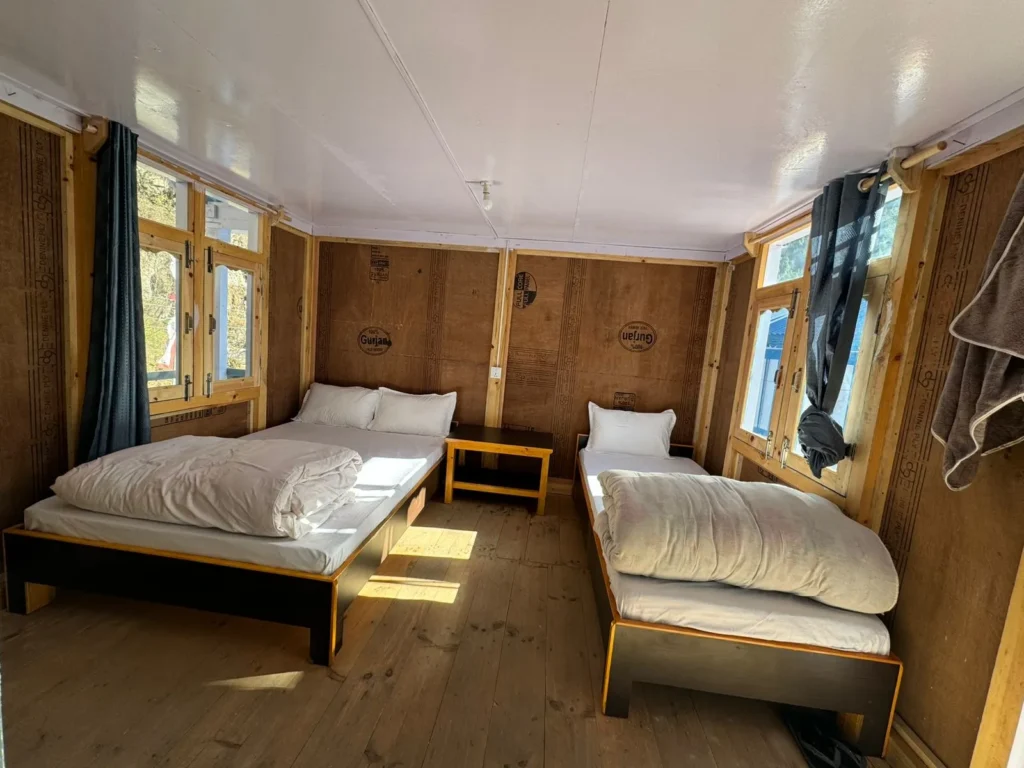
The homestay in Ghale Gaun is community-managed and strictly organized. You won’t find large resorts here; instead, you stay directly with families in traditional stone houses with local Gurung families in traditional stone houses, sharing meals, helping with small daily tasks if they wish, and joining evenings around the fire with their hosts.
Accommodation Style
While there are a few Ghale Gaun accommodation options like small guest houses for those wanting more privacy, the majority of visitors opt for the authentic homestay.
Homes are built from stone with timber interiors, slate roofs, and small courtyards. Rooms are simple but clean, with warm blankets provided for the cool mountain nights. The experience prioritizes authenticity over luxury, which is precisely the point. You are a guest in someone’s home, not a resort.
If you are debating between a hotel vs homestay in Nepal, Ghale Gaun is the ultimate proof that staying with a local family offers a deeper connection than any resort.
Welcome Ceremony
Arriving guests are received with a traditional garland and red tika welcome, a deeply meaningful gesture of hospitality in Nepali and Gurung culture. From the first moment, you are treated not as a tourist but as a member of the family.
Daily Life Immersion in Ghale Gaun
- Wake early for a spectacular Himalayan sunrise from the village. Hike isn’t required
- Morning walks through the village with your host family
- Visit terraced fields, vegetable gardens, and local farms
- Watch or participate in traditional food preparation and weaving
- Short hikes to nearby viewpoints for panoramic mountain views
- Evening cultural programmes with dance and live folk music
- Guided village tours to the Gurung Museum and local monasteries
Staying at a Ghale Gaun homestay means becoming part of a Gurung family for a day or two sharing their food, their stories, and their sky.
Ghale Gaun Homestay Cost: What to Expect
The cost of a homestay in Ghale Gaun is affordable and typically follows a community-based pricing system, ensuring fair income distribution among local families.
On average, visitors can expect to pay between NPR 1,500 and NPR 2,500 per person per day, which usually includes:
- Accommodation in a traditional Gurung home
- Three home-cooked meals (breakfast, lunch, and dinner)
- Cultural programs and village activities
Prices may vary slightly depending on the season, group size, and additional services such as guided tours or transportation.
| Item | Estimated Price (NPR) |
| Daily Package (Room + 3 Meals) | NPR 1,500 – 2,200 |
| Cultural Program (Group Cost) | NPR 3,000 – 5,000 |
| ACAP Permit (SAARC / Foreigner) | NPRC1,000 / 3,000 |
Compared to commercial hotels in cities like Kathmandu, the homestay experience offers far greater cultural value and personal connection, making it well worth the cost.
While these rates are community-fixed, you can check our detailed guide on how much accommodation costs in Nepal to see how Ghale Gaun fits into your overall travel budget.
Pro Tip: Ghale Gaun accommodation options are primarily homestays, but 2-3 small guest houses have recently opened for those wanting more privacy.
Food & Local Cuisine
One of the unexpected highlights of Ghale Gaun is the food. All meals are prepared fresh by your host family using organically grown, locally sourced ingredients, many of them harvested from the family’s own terraced fields.
The organic food includes:
- Dal Bhat: The Nepali staple of lentil soup, steamed rice & seasonal vegetable curry
- Dhindo: Traditional buckwheat or millet porridge, a Gurung comfort food
- Gundruk: Fermented leafy greens that are tangy, mineral-rich, and deeply local
- Herbal Tea: Made from wild-foraged local herbs; warming and aromatic
- Sel Roti: Crispy fried rice dough rings, served at festivals and with morning tea
- Fresh Yogurt: Thick, creamy homemade yogurt from local cows and buffalo
For those interested, evenings also offer the opportunity to taste locally brewed raksi (millet or rice spirit) and tongba (warm fermented millet drink), the traditional way Gurung families celebrate gatherings and guests.
Himalayan Views from Ghale Gaun
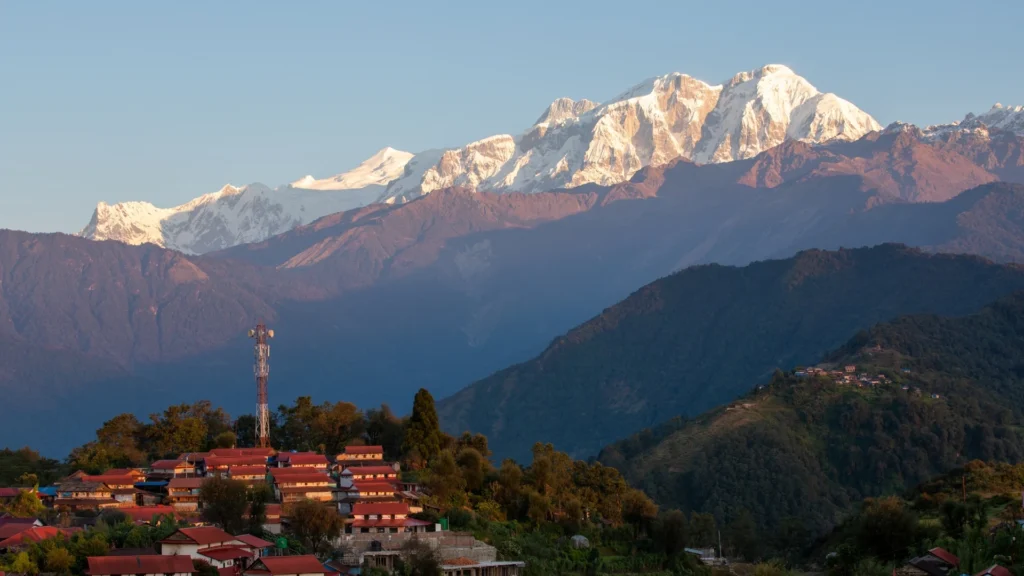
The mountain panorama visible from Ghale Gaun is nothing short of extraordinary. Set between the Annapurna massif and the Manaslu range, the village commands some of the finest unobstructed Himalayan views accessible without a strenuous high-altitude trek.
Peaks visible on clear days include
- Annapurna I: 8,091 m
- Annapurna II: 7,939 m
- Annapurna IV: 7,525 m
- Machhapuchhre: 6,993 m
- Himalchuli: 7,893 m
- Lamjung Himal: 6,932 m
- Boudha Himal: 6,974 m
- Mt. Manaslu: 8,163 m
A five-minute walk from your homestay in Ghale Gaun brings you to the viewpoint tower, the perfect spot for a sunrise ritual.
The trail to and from Ghale Gaun also passes through lush rhododendron forests (spectacular in bloom from March to April), terraced farmland, cascading waterfalls, and suspension bridges over mountain rivers.
Things to Do While Staying in a Ghale Gaun Homestay
Beyond the peaceful setting, there are plenty of meaningful experiences to enjoy during your stay in Ghale Gaun:
- Watch the Himalayan sunrise from the village viewpoint tower
- Explore the Gurung Museum and learn about local history and traditions
- Join cultural dance performances in the evening
- Take short hikes through rhododendron forests and terraced fields
- Interact with local families and experience daily village life
- Visit nearby villages like Bhujung for a deeper cultural experience
These activities make Ghale Gaun more than just a destination; it becomes a cultural journey.
For those seeking a deeper Ghale Gaun travel guide experience, take a 2-hour hike to Bhujung Village. It is famous for its compact stone houses and the nearby honey hunting sites where locals harvest wild honey from massive cliffs.
Book your authentic Ghale Gaun homestay today and experience Gurung culture firsthand!
Best Time to Visit Ghale Gaun
While spring and autumn are best for views, visiting in late spring (April/May) gives you a chance to witness the daring traditional honey hunting on the cliffs surrounding the village.
Ghale Gaun can be visited year-round, but different seasons offer very different experiences.
To see the village at its best, timing is key. Here is the breakdown for the best time to visit Ghale Gaun:
| Season | Months | Conditions | Rating |
| Spring | Mar–May | Rhododendrons in full bloom, clear skies, warm days. Perfect mountain views and vibrant trails. | Best |
| Autumn | Sep–Nov | Post-monsoon clarity, sharp mountain views, and harvest season in the village. Ideal trekking weather. | Best |
| Winter | Dec–Feb | Cold and peaceful. Fewer tourists, intimate homestay atmosphere, occasional snow on surrounding hills. Pack warm layers. | Good |
| Monsoon | Jun–Aug | Lush green landscape, fewer crowds, but trails can be muddy and mountain views obscured by cloud. | Fair |
The best time to visit Ghale Gaun for photographers is October or November, when the air is crisp after the rains.
How to Get to Ghale Gaun
| Method | Route | Duration | Approx. Cost (NPR) |
| Local Bus | Ktm To Besisahar (Local Jeep to Village) | 9–10 Hours | NPR 1,200 – 1,500 |
| Private Jeep | Direct Ktm to Ghale Gaun (4WD) | 7–8 Hours | NPR 15,000 – 20,000 (Full Jeep) |
| Hiking Path | Drive to Khudi and Trek Uphill | 6 hrs Drive + 5 hrs Hike | Bus/Jeep fare + Guide |
From Kathmandu
The most common route involves a 6–7 hour drive from Kathmandu to Besisahar (the gateway of the Annapurna Circuit), followed by a 3–4 hour trek to Ghale Gaun. Alternatively, drive to Khudi and then trek approximately 2 hours to the village. Private jeep hire is recommended for comfort and flexibility.
From Pokhara
Pokhara offers a shorter entry point, roughly a 3-hour drive via the Thumsikot–Pasgaun–Bhujung route, or via Besisahar on the Besisahar–Baglungpani–Kapur Gaun road (the most popular route). Ghale Gaun lies approximately 21 km northwest of Pokhara.
Permits Required
- Annapurna Conservation Area Permit (ACAP) available in Kathmandu or Pokhara
- TIMS Card (Trekkers’ Information Management System card)
Pro Tip: 2–3 Day Ghale Gaun Itinerary
Spend 2–3 days in Ghale Gaun for the best experience. Travel from Kathmandu or Pokhara, trek to the village, enjoy a cultural evening, explore local life and viewpoints the next day, and return on Day 3.
Skip the hassle of logistics and explore Ghale Gaun tour packages on ghumNepal.
Essential Travel Tips for Ghale Gaun
For those traveling solo or for the first time, you might wonder, are homestays in Nepal safe? In Ghale Gaun, the answer is a resounding yes due to their organized community-watch system.
- Pack good trekking shoes with ankle support; trails include steep sections and uneven stone paths
- Bring warm layers year-round; evenings at 2,095 m get cold even in summer
- Mobile connectivity can be limited; inform family before departing and carry a basic first-aid kit
- Carry Nepali Rupees in cash; ATMs are not available in the village
- Respect local customs: dress modestly, ask before photographing people, and remove shoes when entering homes
- Follow leave-no-trace principles; the community takes great pride in keeping Ghale Gaun clean
- Small gifts for host families (tea, notebooks, or local sweets) are welcomed and appreciated
- Ensure you have travel insurance that covers emergency evacuation at altitude
- Book your homestay in advance during peak season (March–May and September–November)
- A few words of Nepali or Gurung greetings go a long way locals deeply appreciate the effort
Pro Tip: If you don’t have time for a full 3-day trip, consider looking for a homestay near Kathmandu for a shorter village experience.
FAQ’S
It is famous for being South Asia’s model tourism village, its unique Gurung culture, and unobstructed views of the Annapurna and Manaslu ranges.
No, the village is very well organized. However, it is best to book in advance during peak seasons.
Yes, you will need the Annapurna Conservation Area Permit (ACAP) and a TIMS card.
A day’s stay (room and 3 meals) typically costs between NPR 1,500 and NPR 2,200 per person. Cultural dance programs for groups are available for an extra NPR 3,000 to NPR 5,000.
Yes, it is an easy, low-altitude trip (2,095 m) with no risk of altitude sickness. The stone-paved paths make it perfect for families, seniors, and first-time hikers.
A guide isn’t mandatory for the village but is highly recommended for trekking to Bhujung. Your guide provide essential cultural context and handle all local permits (ACAP/TIMS).
A 2 to 3-day itinerary is ideal for experiencing the sunrise and local Gurung culture. Stay 4 days if you want a deeper retreat to participate in traditional farming or weaving.
Ready to Experience Ghale Gaun?
ghumNepal makes it easy to book authentic Ghale Gaun homestay packages with trusted local guides, flexible itineraries, and community-first travel. Every booking directly supports the Gurung families who call this extraordinary village home.