Best Areas to Stay in Kathmandu
Share:
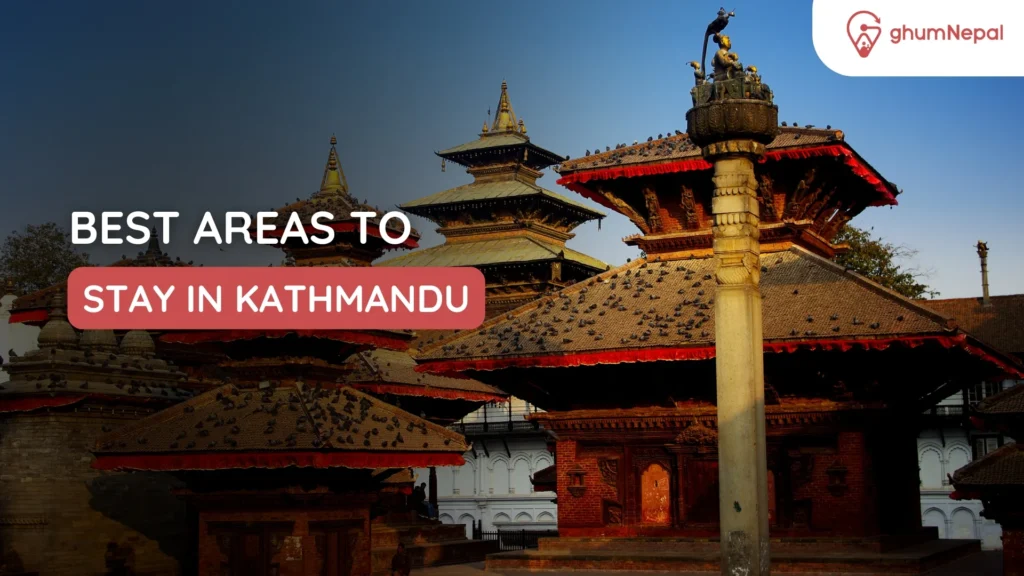
The best areas to stay in Kathmandu are Thamel for first-time visitors and backpackers, Boudha (Boudhanath) for spiritual seekers and digital nomads, Patan (Lalitpur) for culture and heritage lovers, Lazimpat for luxury and business travelers, Durbar Marg for shopping and city access, and Bhaktapur for history enthusiasts seeking a medieval atmosphere.
Kathmandu is not one city; it is many cities layered atop each other. Choosing where to stay in Kathmandu shapes your entire experience: the sounds you wake up to, the streets you wander, the food on your plate.
Whether you are a first-time traveler overwhelmed by the chaos, a trekker gearing up for the Himalayas, a spiritual seeker drawn to ancient monasteries, or a business professional needing comfort and connectivity, this guide will help you find the perfect neighborhood. We cover safety, convenience, budget, atmosphere, and proximity to major attractions for every type of traveler.
Why You Should Choose the Right Area to Stay In Kathmandu
Your choice of neighborhood in Kathmandu directly affects every aspect of your trip. Here is what to consider when deciding where to stay in Kathmandu:
- Proximity to attractions: UNESCO World Heritage Sites are spread across Thamel, Patan, Bhaktapur, and Boudha. Staying near your priority sites saves time.
- Travel purpose: Trekkers need Thamel. Meditators need Boudha. Historians need Bhaktapur or Patan.
- Budget: Prices range from $5/night guesthouses in Thamel to $250+/night luxury hotels in Lazimpat.
- Noise & atmosphere: Thamel buzzes until midnight; Boudha and Patan are peacefully quiet by evening.
- Safety & convenience: All major tourist neighborhoods in Kathmandu are considered safe, but areas like Lazimpat and Patan are especially calm and well-managed.
Understanding how to navigate this complexity is key to exploring Kathmandu with smart tips to experience the city like a local.
Best Neighborhoods To Stay in Kathmandu
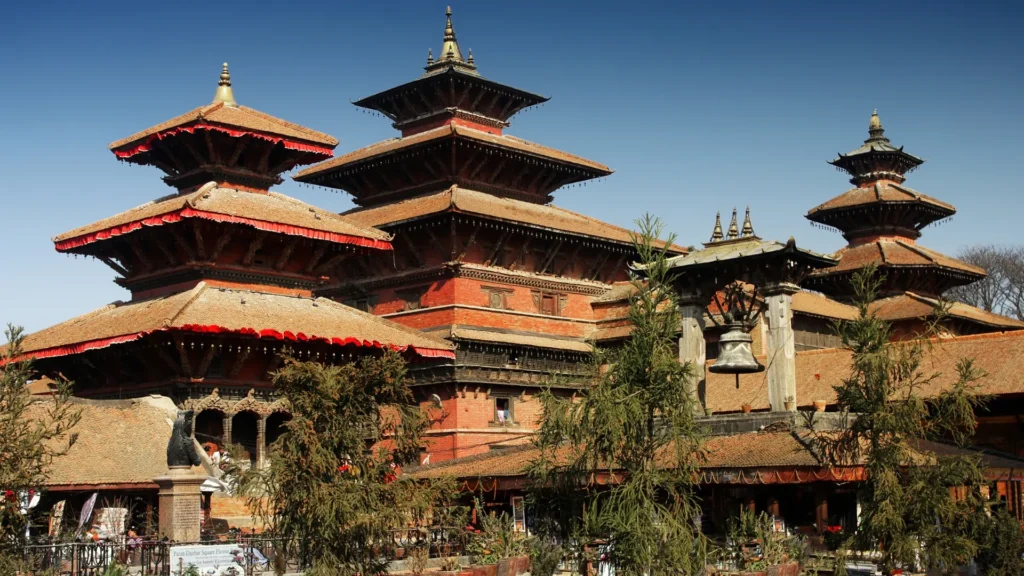
Kathmandu’s neighborhoods are as diverse as the mountains surrounding them. To help you navigate the valley’s unique pockets of culture and convenience, here is a quick comparison of the best areas to stay based on vibe and value.
1. Thamel – The Classic Traveler’s Hub
Best for: First-Time Visitors, Solo Travelers & Backpackers
Thamel is the beating heart of Kathmandu’s tourist scene. Its narrow, medieval lanes overflow with trekking gear shops, rooftop bars, thangka galleries, and the intoxicating smell of dal bhat drifting from a dozen open kitchens.
Thamel is the top choice for where to stay in Kathmandu for tourists. This makes it the premier hub for budget accommodation in Nepal.
For most visitors, it is the default starting point, and for good reason. Every service a traveler needs is within a short walk: trekking permits, travel agencies, money changers, ATMs, pharmacies, and some of the best backpacker hostels in South Asia.
Pros
- All trekking permits and agencies within walking distance
- Widest range of accommodation (budget to boutique)
- Excellent international restaurants and cafés
- Vibrant nightlife and rooftop bars
- Easiest for solo travelers and first-timers
Cons
- Loud, crowded, and chaotic at all hours
- Heavy tourist pricing in shops and restaurants
- Less authentic local culture
- Traffic and pollution can be overwhelming
Local Tip
Stay on the northern end of Thamel near Chhetrapati for a slightly quieter experience while remaining walking distance from all amenities. Book accommodation with a rooftop; the views are worth it.
2. Boudha (Boudhanath) – The Spiritual Enclave
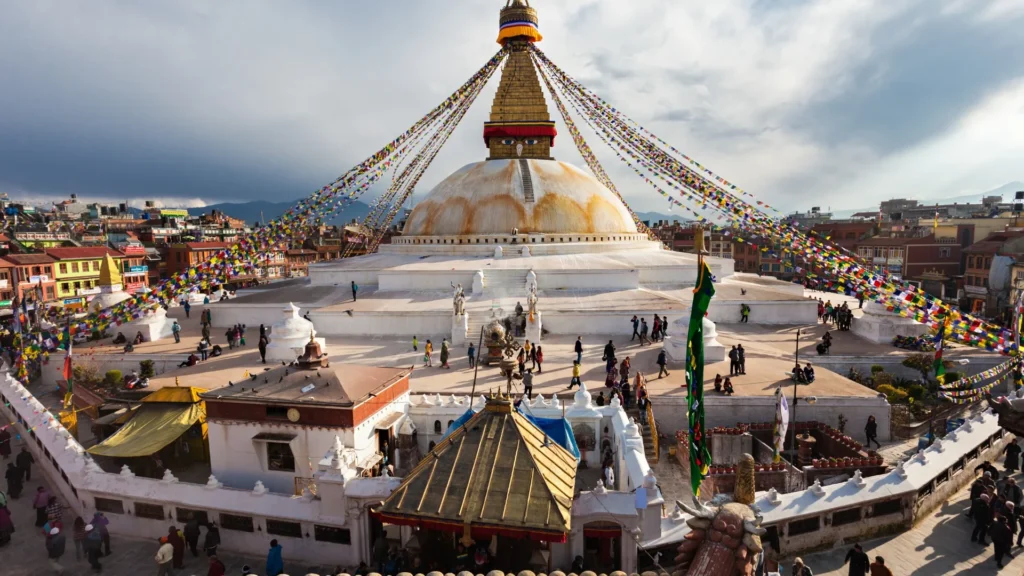
Best for: spiritual travelers, digital nomads, photographers Long stays
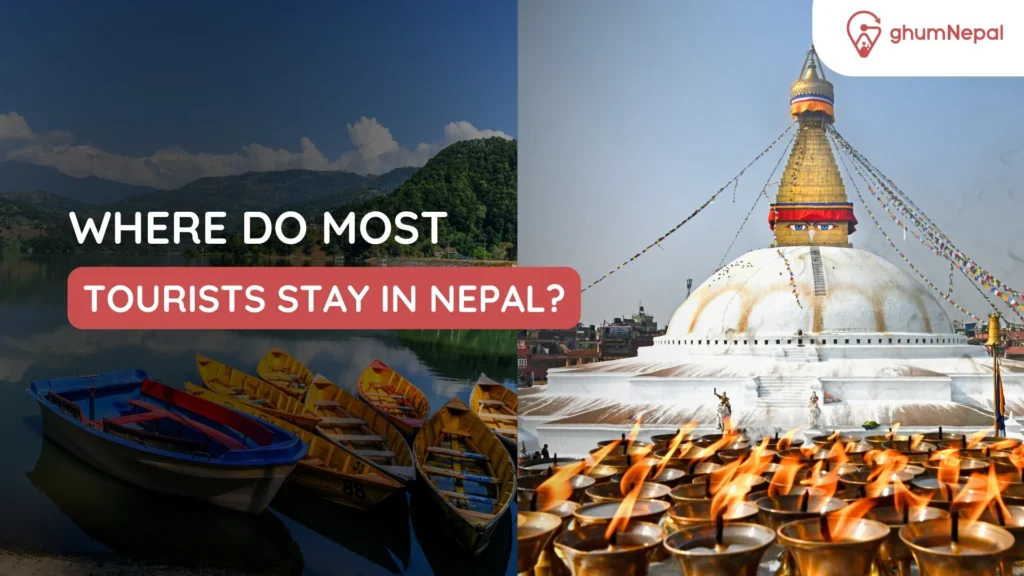
One of the world’s largest stupas, Tibetan monasteries, and deep calm is located in Boudha.
Walk out your door and circumambulate one of the greatest Buddhist monuments on earth that is the daily reality of staying near Boudhanath.
The neighborhood is home to a large Tibetan refugee community, dozens of monasteries, and a thriving cafe culture that has grown along the stupa’s kora path. Evenings here with butter lamps flickering and monks chanting feel unlike anywhere else in Nepal.
It is meditative, atmospheric, and surprisingly well-connected to the rest of the city. This area has also become a magnet for digital nomads who appreciate the calm, reliable Wi-Fi in cafes and authentic local life.
Pros
- Walking distance to Boudhanath Stupa (UNESCO site)
- Authentic Tibetan food, art, and culture
- Peaceful, meditative atmosphere
- Great café scene with reliable Wi-Fi
- Ideal for long stays and retreat
Cons
- Further from Thamel’s services and nightlife
- Limited high-end hotel options
- Can feel isolated for social travelers
3. Chhetrapati — Hidden Gem Between Thamel and the Old City
Best for: Value seekers, cultural explorers, and those wanting Thamel’s convenience without the noise.
Tucked between the neon lights of Thamel and the ancient spice markets of Asan Bazaar, Chhetrapati is the “buffer zone” of Kathmandu. It offers the perfect middle ground: you are a five-minute walk from the city’s best trekking shops, yet you wake up to the authentic rhythm of a local Newari neighborhood rather than the thumping bass of a tourist bar.
The area centers around a historic Chowk (square) featuring a preserved temple and one of the city’s ancient stone water spouts (Dhunge Dhara). Staying here allows you to witness daily rituals locals offering morning prayers and vendors moving fresh produce—before you’ve even had your morning coffee. It is the best area for travelers who find Thamel too “touristy” but aren’t quite ready for the relative isolation of the outer suburbs.
Pros
- Strategic Location: Walking distance to both Thamel and Kathmandu Durbar Square.
- Quiet Convenience: Significantly lower noise levels than central Thamel.
- Authentic Atmosphere: Surrounded by local tea shops, traditional brass-work stores, and historic shrines.
- Better Value: Boutique guesthouses and heritage stays here often offer larger rooms for lower prices.
- Proximity to Asan: Easy access to the city’s most atmospheric traditional market for photography and spices.
Cons
- Narrow Streets: Can feel congested with local motorbike traffic during rush hours.
- Fewer “Western” Amenities: Most high-end international restaurants are a short walk away in Thamel.
- Limited Nightlife: Streets become very quiet after 9:00 PM compared to its neighbors.
4. Patan (Lalitpur)
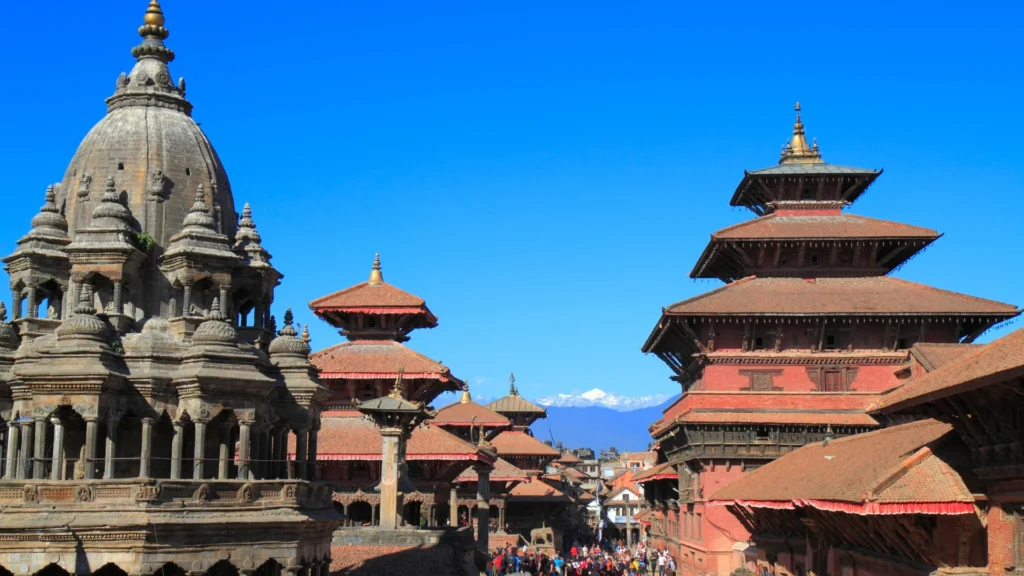
Best for: culture & heritage lovers, culture seekers, couples, and heritage travelers. Longer stays
Patan has UNESCO heritage squares, Newari courtyards, galis (alleys), and a quieter pace of life. Just across the Bagmati River, Patan is arguably the most beautifully preserved city in the entire Kathmandu Valley. Its Durbar Square, a UNESCO World Heritage Site, is surrounded by ancient temples, medieval palaces, and traditional courtyards that have barely changed in centuries.
Staying here means waking up to temple bells rather than motorbikes and wandering into the most authentic expression of Newari culture remaining in Nepal. The restaurant scene is excellent, the artisan craft shops are genuine, and the overall atmosphere is far more liveable than Thamel.
Pros
- Steps from UNESCO Patan Durbar Square
- Authentic Newari architecture and culture
- Excellent local restaurants and artisan shops
- Far quieter and more peaceful than Thamel
- Ideal for couples and longer stays
Cons
- Fewer trekking services than Thamel
- Slightly higher prices than budget areas
- Requires taxi or ride-share to reach Thamel
5. Lazimpat
Best for: families, luxury seekers & Business Travelers
Embassies, five-star hotels, tree-lined streets, and genuine breathing room are near Lazimpat. Lazimpat is where Kathmandu exhales. Wide, tree-lined streets; embassies; international schools; and some of the finest hotels in Nepal, including legendary properties like Dwarika’s, make this upscale residential neighborhood the natural choice for business travelers and those seeking genuine comfort.
The atmosphere is calm, sophisticated, and well-managed. Fine dining options here are exceptional, and you are insulated from the city’s sensory intensity while remaining close to everything that matters.
Pros
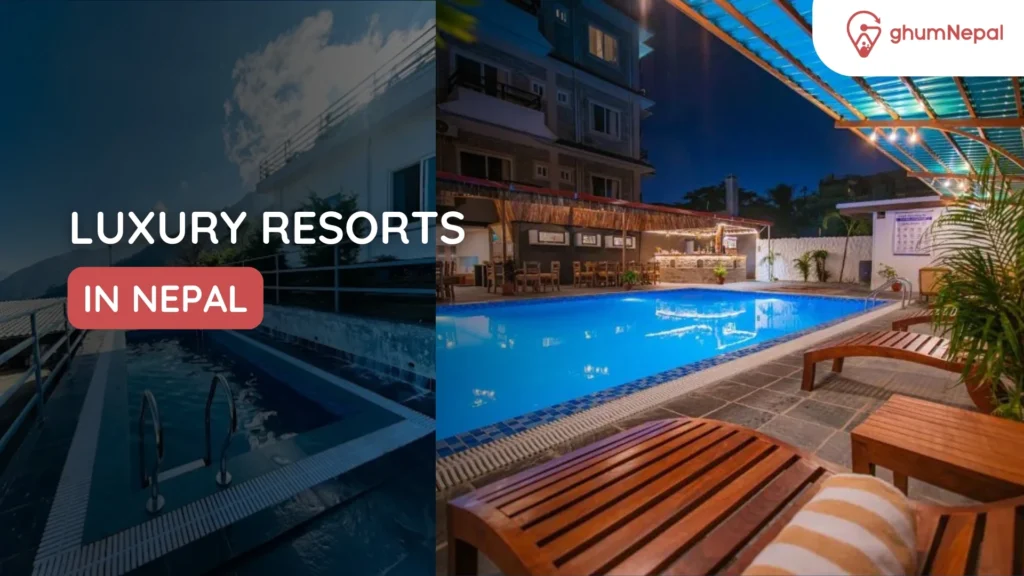
- Home to 5-star and boutique luxury hotels
- Embassy district, it is very safe and quiet
- Excellent fine dining restaurants
- Spacious, green, and low on pollution
Cons
- Most expensive area in the city
- Limited-budget accommodation
- Requires transport to reach attractions
6. Bhaktapur
Best for: History lovers Slow travelers’ culture immersion
A living medieval city preserved, proud, and deeply Nepali, Bhaktapur, the City of Devotees, is unlike any other place in the Kathmandu Valley. Largely spared from modern development, its ancient streets of brick and stone feel genuinely centuries old. Staying here rather than just visiting as a day trip is one of the most rewarding decisions a history-loving traveler can make.
The city is dramatically quieter after the day-trippers leave, the local pottery squares and woodcarving workshops come alive, and the atmosphere of a living medieval culture becomes tangible. Note that foreign visitors pay an entry fee to the city.
Pros
- Most authentically preserved medieval city
- Three UNESCO-listed Durbar Squares nearby
- Excellent Newari food (try juju dhau)
- Peaceful after evening tourist hours
Cons
- 13km from central Kathmandu that requires transport
- Entry fee for foreign visitors (~$15)
- Limited international dining options
7. Durbar Marg
Best for: Business travelers, short stays, and luxury tourists
Kathmandu’s prestigious boulevard central, chic, and supremely connected as Durbar Marg is the closest thing Kathmandu has to a grand city boulevard lined with airline offices, upscale shops, well-known hotels, and some of the city’s best restaurants.
Its prime central location puts you equidistant from the old city and the modern commercial districts, making it ideal for short stays where every hour counts. The Narayanhiti Palace Museum is a short walk away, and taxis or Pathao rides to any neighborhood in the valley are easy to find.
Pros
- Prime central location everything accessible
- High-end shopping, dining, and services
- Walking distance to Narayanhiti Palace Museum
- Excellent transport connections
Cons
- Less character than Thamel or Patan
- Mid-to-high price range for most options
Ready to find the right accommodation? You can explore and book the best hotels in Kathmandu via ghumNepal to ensure a seamless stay.
Other Notable Areas to Consider Stay in Kathmandu
If the main tourist districts don’t quite fit your vibe, Kathmandu has several alternative neighborhoods that cater to specific interests from modern expat hubs to sacred temple-side stays. Here are three other notable areas to consider for your trip.
Jhamsikhel — Trendy, Modern, and Local
Jhamsikhel sits south of Patan and has emerged as Kathmandu’s most vibrant modern neighborhood. Excellent specialty coffee shops, craft beer bars, international restaurants, and a thriving creative community make this the top choice for younger travelers and those seeking a more contemporary Nepali experience. Accommodation is mostly mid-range boutique guesthouses.
Pashupatinath Area — Sacred and Culturally Significant
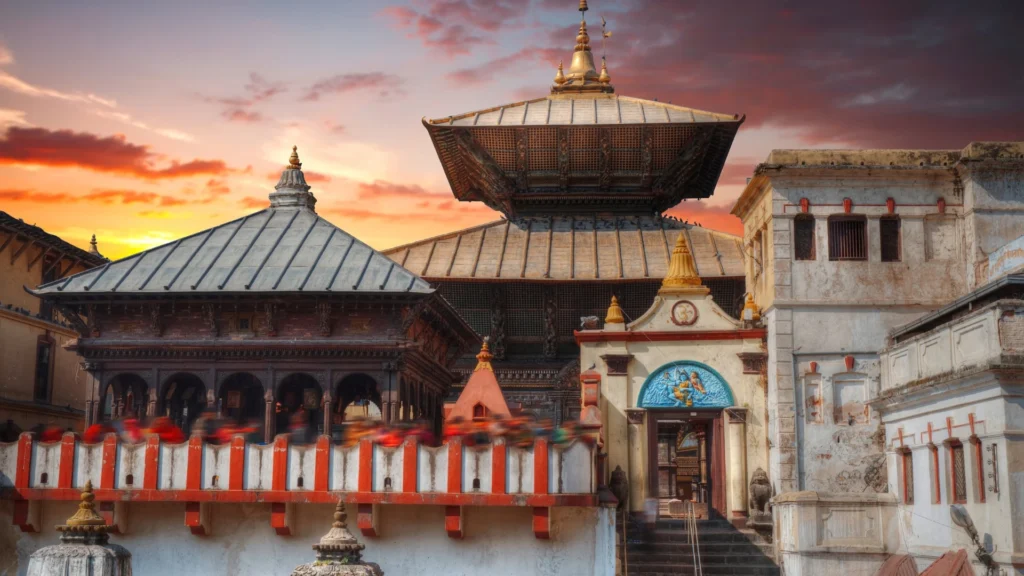
Staying near Pashupatinath one of the most sacred Hindu temples in Asia offers a deeply immersive spiritual experience. Watch morning arati ceremonies, observe cremation ghats along the Bagmati River (handled with great dignity), and explore the surrounding forest monastery complex. Best for spiritually curious travelers comfortable with a more solemn atmosphere.
Freak Street (Jhochhen Tole) — Budget Stays with Historic Charm
This area near Kathmandu Durbar Square became famous in the 1960s hippie trail era and retains some of that bohemian energy. It offers the cheapest accommodation in the city often under $10/night in a genuinely historic setting. A great choice for extreme budget travelers who want proximity to the old city’s UNESCO sites.
Accommodation Types & Budget Guide to Stay in Kathmandu
Kathmandu’s hospitality scene is as varied as its landscape. Whether you are looking for a $5 bed in a social hostel or a $250-a-night heritage suite that feels like a living museum, the city has an option for every wallet. Below is a breakdown of what you can expect to pay and the best areas to find each type of stay in 2026.
Luxury Hotels & Heritage Suites (5-Star)
Price Range: $95 – $250+ per night For those seeking world-class comfort, Kathmandu offers legendary properties that blend modern luxury with traditional Nepali architecture. These hotels are sanctuaries of peace, featuring expansive gardens, spas, and temperature-controlled pools.
- Top Picks: Dwarika’s Hotel (a heritage masterpiece), Hyatt Regency, and Hotel Yak & Yeti.
- Key Amenities: 24/7 concierge, fine dining, and reliable climate control.
- Best Areas: Lazimpat, Maharajgunj, and Durbar Marg.
Mid-Range & Boutique Hotels (3–4 Star)
Price Range: $45 – $95 per night This is the “sweet spot” for most travelers. You get high-quality service, modern en-suite bathrooms, and, most importantly, reliable backup generators for consistent power and Wi-Fi.
- Top Picks: Boutique heritage stays in Patan or modern hotels in northern Thamel.
- Key Amenities: Buffet breakfast, air conditioning, and helpful travel desks.
- Best Areas: Thamel, Patan, and Boudha.
Budget Stays & Traveler Hostels
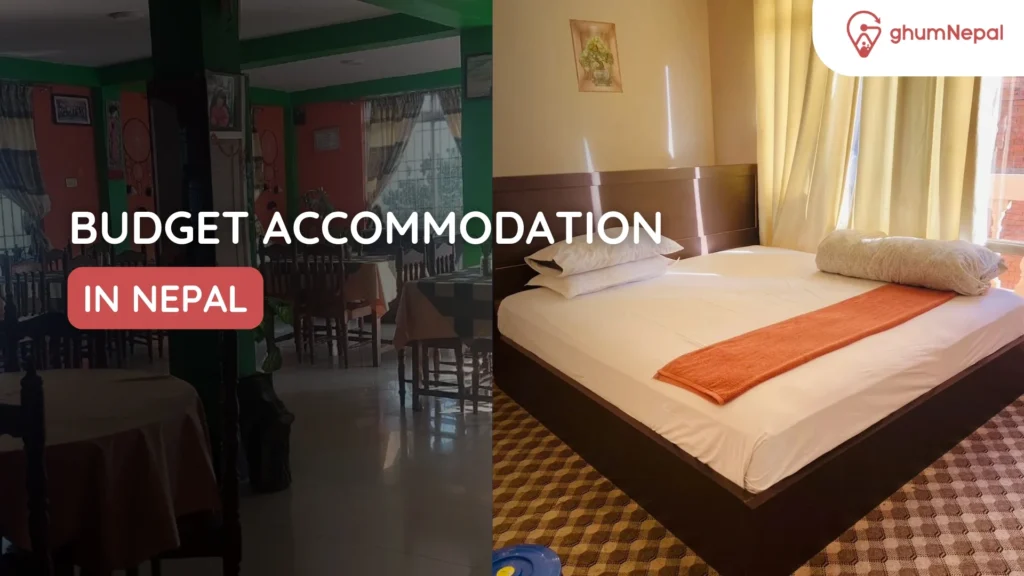
Price Range: $5 – $35 per night Kathmandu remains one of the most affordable cities for backpackers. You can find clean dorm beds for the price of a coffee or basic private rooms that offer a great social atmosphere for meeting fellow trekkers.
- Expectations: Dorms start at $5; private rooms with basic amenities start around $15.
- Key Amenities: Common rooms, rooftop hangouts, and communal kitchens.
- Best Areas: Thamel, Freak Street, and Boudha.
Homestays & Airbnb
Price Range: $20 – $60 per night For a deeper cultural immersion, homestays allow you to live with a Nepali family. This is the best way to experience local life, enjoy home-cooked meals, and learn about the city’s traditions firsthand.
- Expectations: Often includes a private room in a family home with shared or private facilities.
- Key Amenities: Authentic Newari or Tibetan meals and local insider tips.
- Best Areas: Patan, Bhaktapur, and the outskirts of Boudha.
Note: When comparing various Kathmandu hotels and areas, you’ll find that luxury options are concentrated in Lazimpat.
Before booking, it is helpful to understand how much does accommodation cost in Nepal to better plan your daily expenses.
Best Area Based on Your Travel Style in Kathmandu
Not every traveler is looking for the same experience. Whether you are a digital nomad needing stable Wi-Fi or a family looking for quiet, tree-lined streets, here is a quick guide to matching your travel persona with the perfect Kathmandu neighborhood.
- Backpackers & Solo Travelers → Thamel / Freak Street If you are looking for social vibes, cheap dorms, and easy access to trekking partners, Thamel is the place to be. For a grit-and-glory “Old Kathmandu” feel with even lower prices, Freak Street offers a nostalgic, budget-friendly alternative.
- Couples & Romance → Patan / Boudha For a romantic atmosphere, Patan offers stunning heritage boutique hotels and candlelit Newari courtyards. Boudha provides a serene, spiritual backdrop—perfect for sunrise walks around the stupa followed by breakfast on a quiet rooftop.
- Families → Lazimpat Traveling with kids requires space and safety. Lazimpat is the most family-friendly choice, offering large hotels with swimming pools, less traffic noise, and proximity to international grocery stores and clinics.
- Luxury Seekers → Durbar Marg / Lazimpat If you want the “Grand Hotel” experience, Durbar Marg and Lazimpat house the city’s premier 5-star properties. Expect impeccable service, fine dining, and an escape from the city’s sensory intensity.
- Spiritual Travelers → Boudha / Pashupatinath Those drawn to meditation and ritual should stay in Boudha to be near the Tibetan monasteries. For a deeper Hindu cultural immersion, staying near the Pashupatinath temple complex offers a profound look at Nepal’s sacred traditions.
- Digital Nomads → Boudha / Jhamsikhel Boudha is famous for its “laptop-friendly” cafes with views of the Stupa. Alternatively, Jhamsikhel (in Lalitpur) is the city’s modern expat hub, filled with specialty coffee shops and co-working vibes.
Quick Comparison of Where to Stay in Kathmandu
Finding the best places to stay in Kathmandu can be a challenge given the city’s vibrant chaos. Here is a quick breakdown:
| Area | The “Vibe” | Best For | Avg. Cost (Mid-Range) |
| Thamel | Energetic | Backpackers & First-Timers | $15 – $45 |
| Boudha | Serene | Spiritual Seekers & Nomads | $10 – $35 |
| Patan | Cultural | Heritage Lovers & Couples | $25 – $65 |
| Lazimpat | Refined | Business & Luxury Seekers | $45 – $140 |
| Bhaktapur | Medieval | History Lovers & Slow Travel | $15 – $40 |
| Durbar Marg | Prestigious | Shopping & Short Stays | $50 – $150 |
Note: Prices are estimates for 2026. For real-time availability and the best local rates, check the latest listings on ghumNepal.
Things to See and Do in Kathmandu
While your neighborhood base matters enormously, Kathmandu’s major attractions are spread across the valley and worth exploring regardless of where you stay:
- UNESCO World Heritage Sites: Kathmandu Durbar Square, Patan Durbar Square, Bhaktapur Durbar Square, Boudhanath Stupa, Pashupatinath Temple, Swayambhunath (Monkey Temple), Changu Narayan
- Swayambhunath Stupa: The famous Monkey Temple atop a hill, offering panoramic views over the entire valley
- Asan Bazaar: One of Kathmandu’s oldest and most atmospheric traditional markets are perfect for spices, thangkas, and local life
- Day Trips: Nagarkot (sunrise Himalayan views), Dhulikhel (mountain panoramas), Namobuddha (sacred pilgrimage site)
- Cuisine: Try dal bhat (national dish), momo dumplings, Newari cuisine in Patan, Tibetan thenthuk noodles in Boudha, and excellent coffee in Jhamsikhel
Essential Travel Tips for Kathmandu
To help you settle in, here are our top Kathmandu travel accommodation tips regarding connectivity, health, and transport.
- Best Time to Visit: Autumn (Oct–Nov) offers clear skies, spectacular mountain views, and major festivals like Dashain. Spring (March–May) is also ideal for warm weather and blooming flora. Avoid the June–September monsoon to escape frequent rain and obscured views.
- Health & Safety: Air pollution is the main concern; carry an N95 mask, especially in winter. To prevent dengue, use repellent and wear long sleeves during autumn evenings. The city is very safe, even for solo female travelers, often feeling more secure than major Western hubs.
- Getting Around: While taxis are everywhere, use ride-sharing apps like Pathao, InDrive, or Yango for transparent pricing. Many central hubs like Thamel and Durbar Marg are walkable. For day trips to Bhaktapur or Nagarkot, hiring a private car is the most convenient option.
- Connectivity & Power: Pick up a cheap local SIM (Ncell or NTC) at the airport for the best data. While most cafés have Wi-Fi, speeds vary. To avoid disruptions from occasional power cuts, prioritize hotels that specifically advertise backup generators.
Final Tips for Booking Accommodation in Kathmandu
Book well in advance during peak trekking seasons (October–November and March–May) as quality accommodation fills up quickly. Always check the exact location on Google Maps addresses in Kathmandu can be imprecise.
Read recent reviews specifically for Wi-Fi quality, noise levels, and hot water consistency. Most importantly: choose your area based on what you want to experience, not just on price. The right neighborhood will transform your trip.
Knowing the best time to book hotels in Nepal can save you from price hikes during the peak trekking months of October and March.
Final Thoughts
Kathmandu offers something genuinely extraordinary for every type of traveler, making it one of the best areas to stay in Kathmandu for diverse experiences. First-time visitors will find their footing most easily in Thamel, with its unmatched convenience and energy. Those seeking the city’s soul should head to Patan or Boudha. Business travelers and those wanting pure comfort will find Lazimpat exceptional. And anyone with a passion for history owes it to themselves to spend at least a night in Bhaktapur.
The wisest strategy if your schedule allows is to move between neighborhoods during your stay. Start where it is easy, then venture where it is real. Kathmandu will reveal itself slowly and always on its own terms.
Pro Tip: Spend nights 1–2 in Thamel to get oriented, then move to Patan or Boudhanath for a slower, more authentic experience. The contrast will give you a far richer picture of Kathmandu than staying in one place throughout your trip.
FAQs
Thamel is the primary choice for most first-time visitors because it is the city’s central tourist hub, offering easy access to trekking agents, nightlife, and international dining. However, for those seeking a more spiritual atmosphere, Boudha is recommended, while Patan is ideal for travelers interested in traditional Newari culture and architecture.
Yes, the city is very safe, with many residents feeling more secure there than in major Western cities. Solo female travelers can safely walk back to their hotels at night, though it is often recommended to use taxis or have company for added peace of mind.
Prices vary significantly based on the level of luxury, ranging from $5 to $250 per night. Budget hostels and guesthouses typically cost between $5 and $35; mid-range “tourist standard” hotels are roughly $45–$65; and 5-star luxury properties can range from $95 to $150 per person.
A stay of 2 to 5 days is generally recommended to experience the city’s major activities, including UNESCO World Heritage site tours, day hiking, and shopping. We suggest at least 4 days to fully appreciate the city’s chaotic charm without feeling rushed.
The peak tourist seasons are autumn (October to November) and spring (March to May). Autumn offers the best visibility for mountain views and hosts major cultural festivals like Dashain and Tihar, while spring features blooming flowers and warm, clear days.
The most significant health concerns are air pollution and dengue fever. Travelers are advised to use face masks in congested areas and wear full-sleeve clothing or use insect repellent to prevent mosquito bites, particularly during the autumn months when dengue is most prevalent.
While taxis are plentiful, they often charge tourists higher rates; therefore, using ride-sharing apps like Pathao, InDrive, or Yango is highly recommended for fair pricing. Many central areas, such as the walk between Thamel and Lazimpat or Durbar Marg, are also manageable on foot.
There is no strict dress code in modern tourist areas like Thamel, where residents are quite liberal. However, when visiting religious heritage sites or more traditional neighborhoods, it is respectful to wear modest clothing that is not too transparent or revealing
Ready to Plan Your Kathmandu Stay?
Whether you are chasing Himalayan sunrises, ancient courtyards, or spiritual stillness Kathmandu has a neighborhood waiting for you. Start planning your perfect itinerary today.